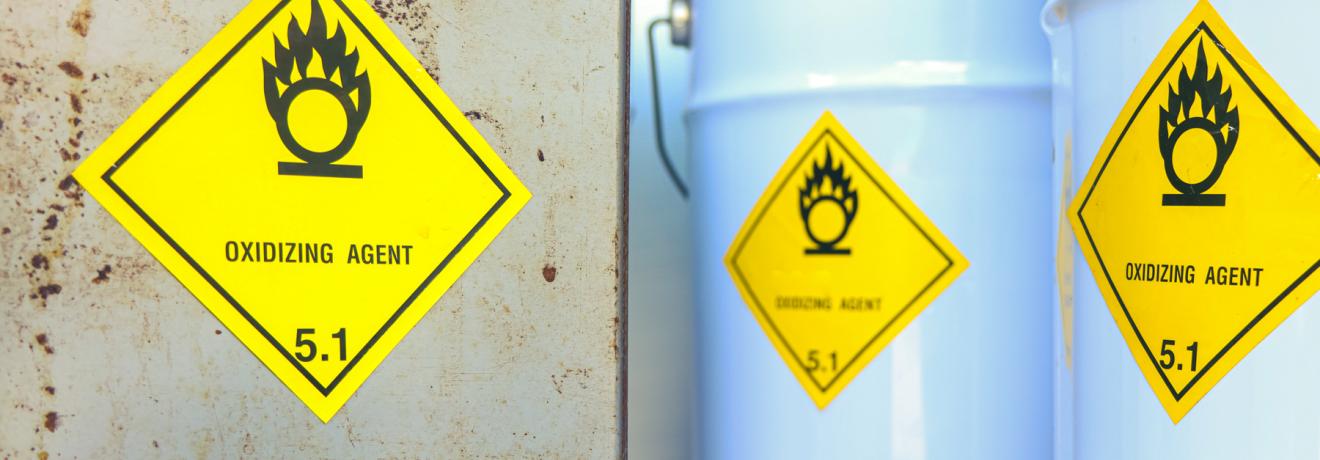
Establish the Correct ADR Classification for a Chemical Product
ADR contains named entries for many substances and articles, but identifying the correct entry is not always straightforward. The Dangerous Goods List uses names rather than CAS numbers, while chemicals may be known by various synonyms, technical names or trade names.
Where no specific named entry applies, classification may require consideration of the product’s composition, structure, physical properties, toxicological effects, corrosivity and environmental hazards to determine the appropriate generic or not otherwise specified entry.
Blue Frog assesses the available product data against the relevant ADR criteria, helping businesses establish or verify the road-transport classification that should be applied.
This service covers transport by road under ADR and excludes explosives, gases and radioactive materials.
How CLP Classification Relates to ADR Transport Classification
CLP and dangerous-goods transport classification use much of the same underlying chemical data. Their criteria have been largely harmonised through the Globally Harmonized System, although differences in scope and application remain.
A product classified as hazardous under CLP is not necessarily regulated as dangerous goods for transport. Conversely, some substances, materials and articles outside the scope of CLP may still be subject to ADR.
Blue Frog considers the product information relevant to both systems rather than attempting to determine an ADR classification from CLP hazard statements alone.
When is an ADR Classification Assessment Needed?
An assessment may be required when launching a product, changing a formulation or reviewing information inherited from a supplier.
It may also be appropriate where; different Safety Data Sheets give conflicting answers, the existing UN entry cannot be justified, or a customer or carrier has challenged the classification.
For mixtures, the answer may depend on ingredient concentrations, the properties of the finished product and the quality of the available evidence. The classifications of the individual ingredients do not always provide the complete transport conclusion.
What an ADR Transport-Classification Review Establishes
Blue Frog can establish or verify the appropriate UN entry. Once that entry has been determined, we can identify the associated ADR provisions, including the proper shipping name, dangerous-goods class, subsidiary hazards, packing group, special provisions and environmentally hazardous substance status.
We can also determine suitable packaging types or assess whether a proposed packaging is appropriate for the product under ADR. The review can provide the applicable packaging instructions and marking and labelling requirements.
The resulting information can be used to complete or verify the road-transport elements of Section 14 of the Safety Data Sheet.
If the available evidence is insufficient, we’ll identify the missing information and explain whether further data, testing or specialist input may be required.
A Documented ADR Classification & Technical Rationale
You will receive a clear record of the information considered, the classification conclusion, the applicable ADR provisions, relevant limitations and the technical reasoning behind the decision.
This provides a supportable basis for the Safety Data Sheet and the product’s regulatory records rather than relying on an unexplained entry carried forward from an earlier assessment.
Ready to Discuss Your ADR Classification Requirements?
If you need to establish, verify or challenge the road-transport classification of a substance or mixture, call or email Blue Frog and speak directly with a certified Safety Adviser for the Transport of Dangerous Goods.
We will discuss the product, the available technical data and how the classification will be used. From there, we can identify any immediate information gaps and define an appropriate scope for the assessment.